
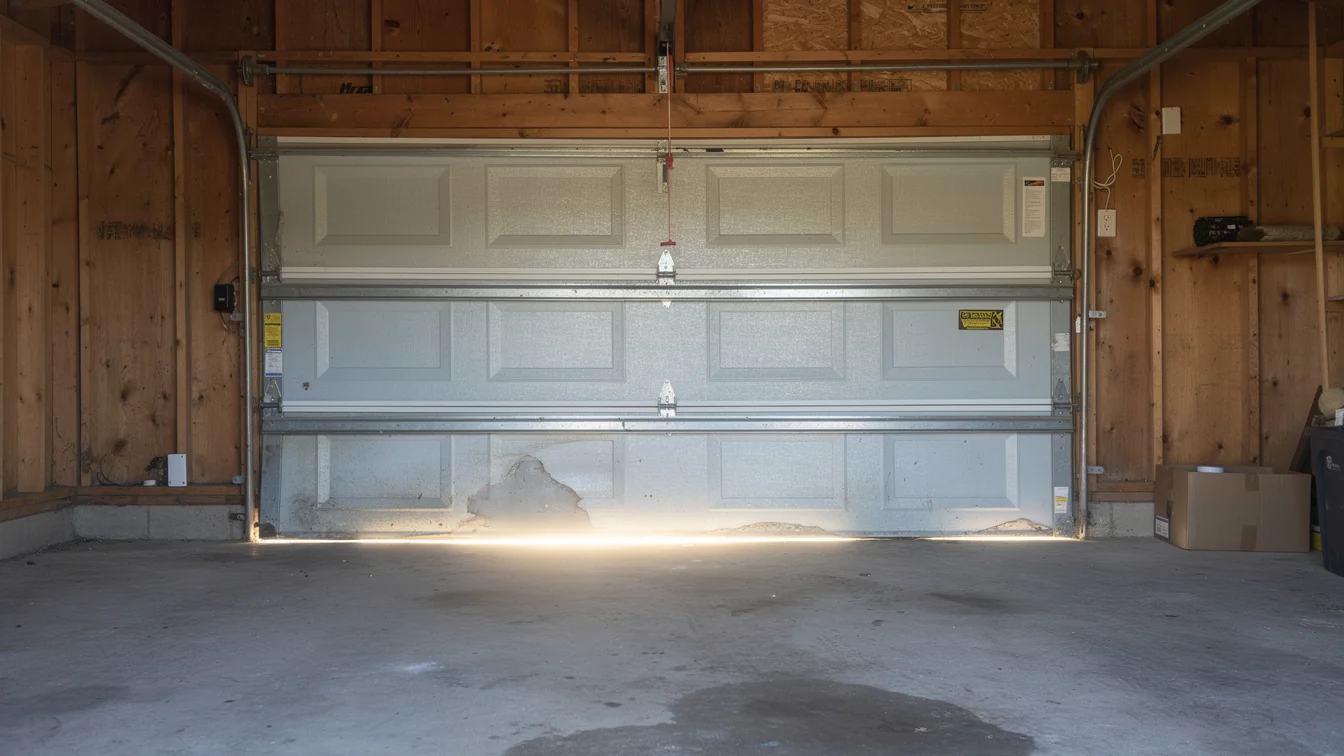
 Garage Doors on Land O' Lakes Homes Built Before Insulation Codes
Land O' Lakes homes mostly date to the 1980s and 90s, built before insulated garage doors were common.
Is Your Garage Door Worth Fixing, or Has It Had Its Run
Land O' Lakes homes mostly date to the 1980s and 90s. Here's how to tell if your original door and hardware are worth repairing or ready to replace.
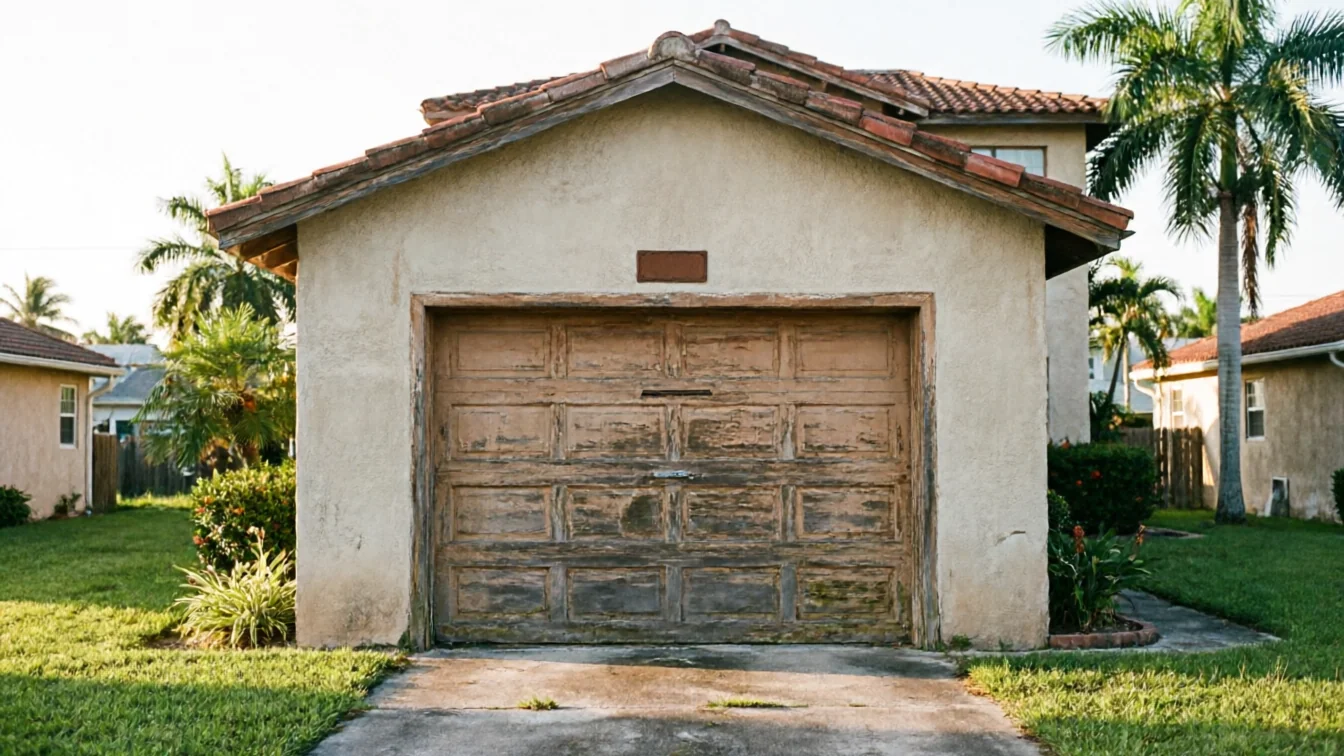
Local detail
What to Check
Start with the springs. If your house was built anywhere near the median year for this area, 1986, there's a decent chance the torsion spring on that door has been cycled for close to four decades, even with a mid-life replacement somewhere along the way. Look at the coils for rust pitting and gaps between winds. Next, grab the bottom corner of the door and lift a few inches with the opener disconnected - it should move with one hand. If it fights you, the springs are tired or mismatched to the door weight.
Check the rollers next. Steel rollers from that era rattle loud and wear oval over time; if yours are still steel and original, that's a sign nothing's been touched in a long while. Nylon replacements run quieter and last longer in this climate. Look at the bottom seal too - in a mild, humid climate like this one it degrades from UV and ground moisture more than from cold, so a cracked or flattened seal after 15-20 years is normal wear, not damage.
Last, sight down the tracks for rust at the base plates, where splash-back and lawn sprinklers hit hardware mounted low on a slab. None of this tells you the door is dying. It tells you what's actually failing versus what's just old.
The area
The Situation
A lot of garages in this area went up between 1970 and 2005, with the bulk of that stock concentrated in the 1980s and 90s. That matters for repair decisions because doors and openers from that build window were standardized in ways that make parts easy to source - steel panel widths, standard torsion drums, chain-drive openers with widely available logic boards. A door from a 1986-era build is not a mystery door. If the panels are straight and the track is true, most of what fails on it is replaceable off the shelf.
Where it gets harder is the handful of homes built closer to 1970, on original hardware nobody updated. Spring winding cones, end bearing plates, and some early opener rail systems from that stretch are no longer made the way they were, and on those we sometimes have to adapt a newer part to an old bracket rather than find an exact match. That's a real limitation - it adds labor time, not just parts cost, and it's worth knowing going in rather than finding out mid-job.
What we find
How Local Conditions Play In
This area sits in a mild temperate band, which works in your favor more than most homeowners realize. You're not dealing with freeze-thaw cycling that cracks concrete aprons or shrinks steel tracks out of alignment, and that alone extends the working life of hardware that would've needed replacing twice over in a harsher climate. Galvanized springs and tracks here mostly fail from age and cycle count, not from weather stress on the metal itself.
What does wear faster here is anything rubber, nylon, or exposed to humidity and UV - bottom seals, weatherstripping, and the grease or lubricant on rollers and hinges, which can dry out or wash thin faster in a wet, sunny climate than in a dry one. Lightly lubricated hardware on an otherwise sound 1980s or 90s door usually just needs cleaning, fresh lube, and a seal swap, not a full teardown. That's the upside of this particular climate: it's gentler on the structural metal, harder on the small consumable parts, and those are the cheap half of the repair.
How we work
When Waiting Is Fine
Not every noise or stiff spot means call today. If the door is from that common 1980s-90s build and it's operating slow or a little loud but still opens smooth and seats flush at the bottom, that's a lubrication and adjustment job, not an emergency. It can wait for a scheduled visit rather than a same-day call.
A cracked bottom seal with no draft or water coming through is also a wait-and-watch item - it's cosmetic and weatherproofing, not structural, especially in a climate without hard freezes to worry about. Where we'd tell you not to wait: a spring that's visibly separated or a cable that's frayed at the drum. Those don't get better, and a door that looks fine one day can come down hard the next once a spring lets go. If you're not sure which category you're in, that's a quick, no-pressure thing to have looked at rather than guessed on.
Questions
Common questions
My garage door is original to a house built in the 80s. Is it too old to fix?
Not necessarily. Most houses in this area were built in the 1980s and 90s, and doors from that window use standard panel sizes and torsion hardware that's still easy to source. If the track is straight and panels aren't dented or rusted through, repair is usually cheaper than replacement.
Does the Florida humidity here wear out garage door parts faster?
It wears out certain parts faster, yes. Rubber seals, lubricant, and nylon rollers degrade from humidity and UV quicker than they would in a dry climate. The upside is the mild temperate climate here doesn't put the freeze-thaw stress on tracks and springs that colder regions deal with, so the metal hardware often outlasts the rubber and plastic parts.
How do I know if it's the spring or the opener that's failing?
Disconnect the opener and lift the door by hand. If it's heavy or uneven, that's spring tension, not the opener. If it lifts easily by hand but the opener struggles or stalls, the problem is in the opener or its drive system, not the spring.
Recommendation
You Might Also Like
More garage door guides for Land O' Lakes homeowners.
Garage Doors on Land O' Lakes Homes Built Before Insulation Codes
Land O' Lakes homes mostly date to the 1980s and 90s, built before insulated garage doors were common.
 What That Noise From Your Garage Door Actually Means
Land O' Lakes houses date mostly to the 1980s and 90s, so original torsion springs and openers are reaching end of life - here's what each noise exactly means.
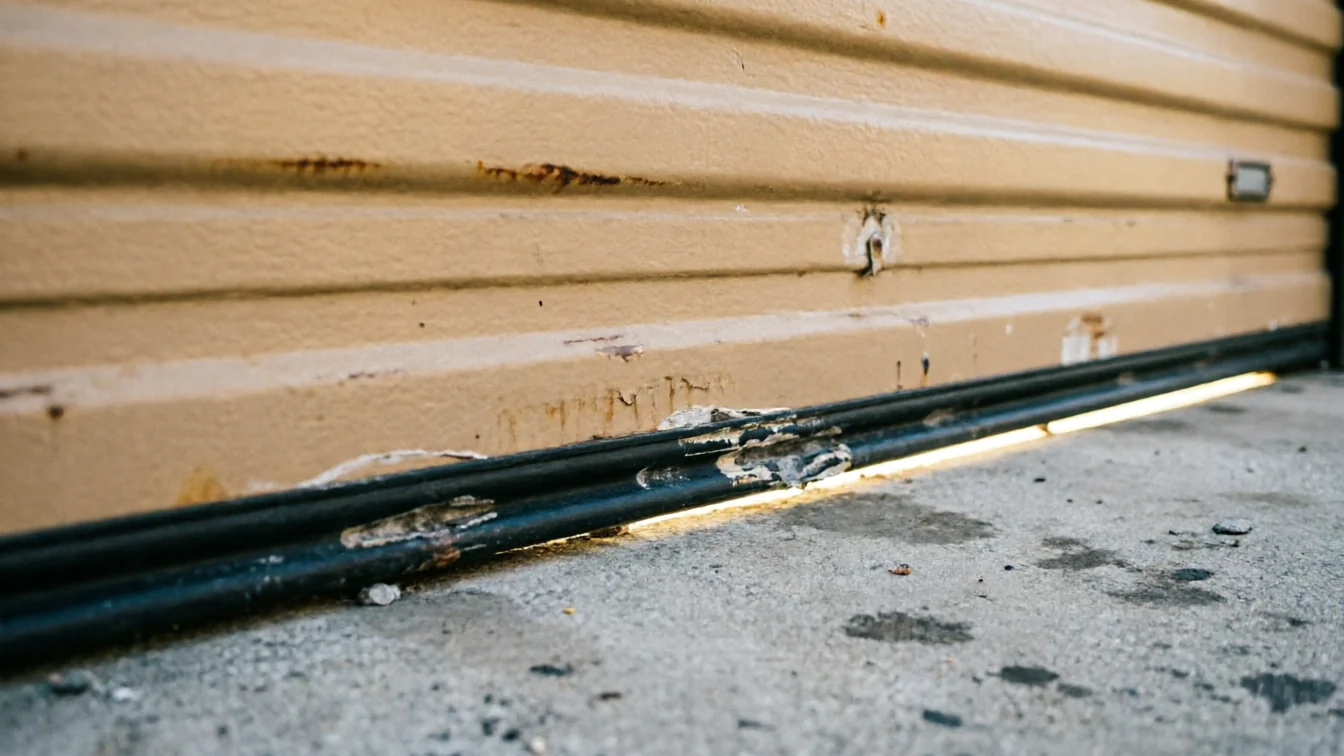 Why Garage Door Seals Fail Early in Land O' Lakes
Land O' Lakes homes built mostly 1970-2005 lose weather seals fast in Florida humidity.
Ready when you are
Need a garage door sorted in Land O' Lakes?
Land O' Lakes Garage Door Pros repairs and installs garage doors, springs and openers in Land O' Lakes, FL and the surrounding area.