How It Shows Up
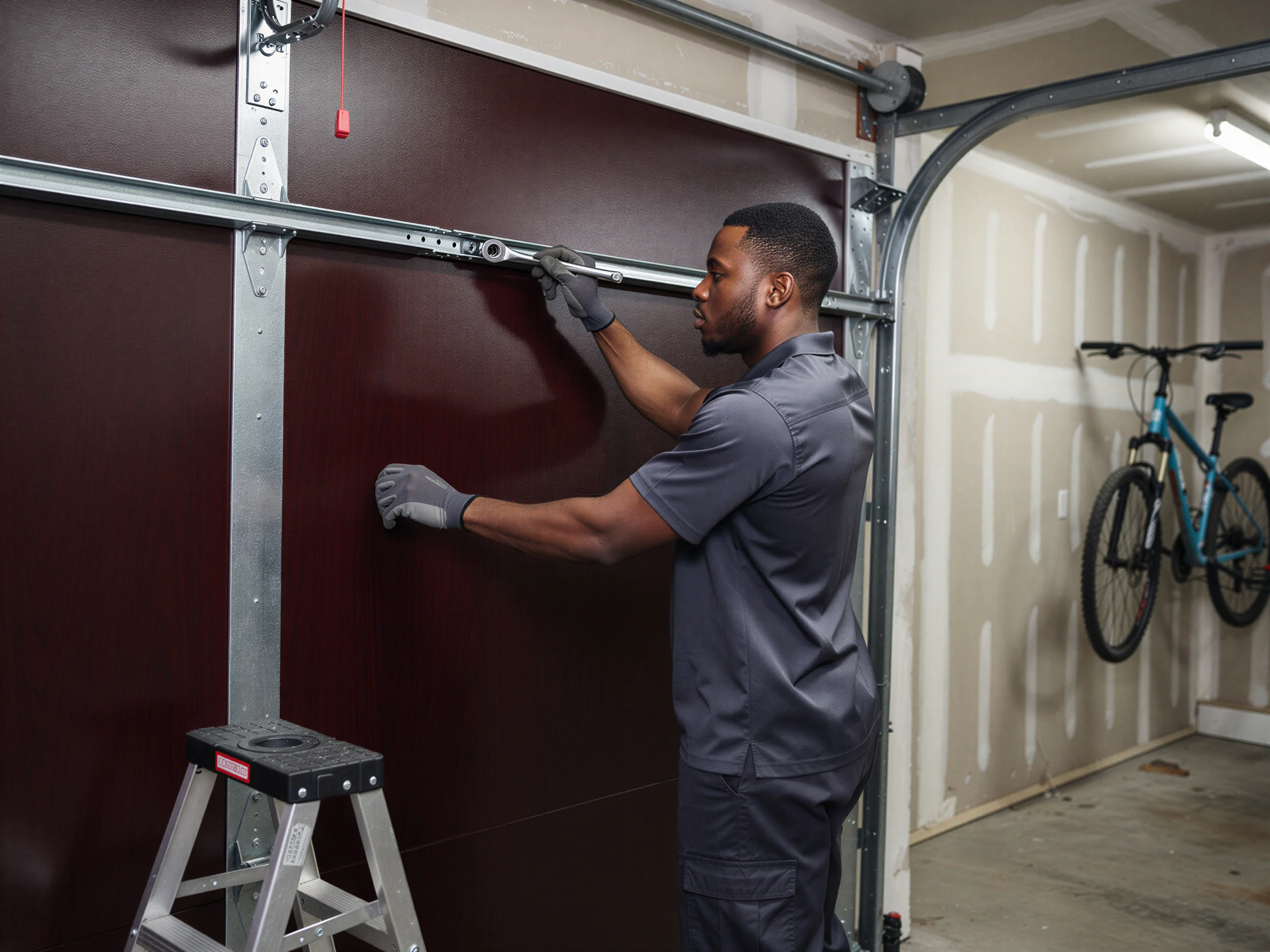
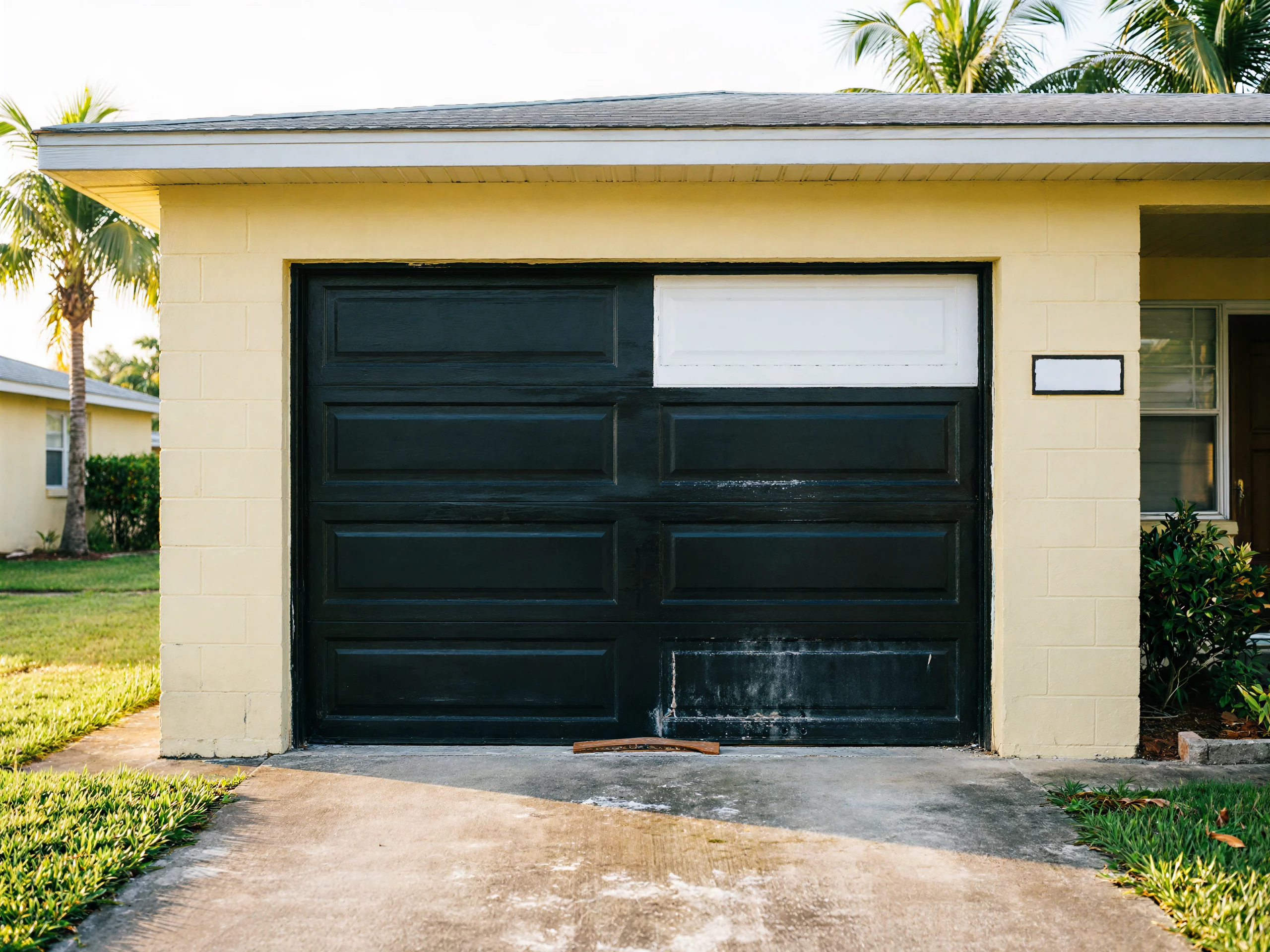
Panel damage on a Land O' Lakes garage door usually starts in one of two spots: the bottom panel, where a trailer hitch, bike, or trash can clips it, or a middle panel that's taken a dent from a basketball or a backed-in bumper.
Creases and bowed sections
You'll see a crease, a bowed-out section, or a crack along a seam where the panel meets the stile. On older steel doors from the 1970s and 80s stock common across this area, rust blisters often show up before the dent does, usually at the bottom edge where water sits after rain.
Rust eating thin metal
Once rust gets under the paint, the metal thins and a panel that could take a knock without damage ten years ago folds inward now. On wood-composite panels, which show up on a fair number of the 1980s and 90s builds here, the failure mode is different: the skin delaminates or swells at the bottom corners first, long before the rest of the door looks tired.
Working door hides damage
Either way, a damaged panel usually still opens and closes fine for a while, which is why a lot of homeowners wait on it. The door working doesn't mean the panel is structurally sound, and a gap at a cracked seam is an opening a track roller or spring can eventually catch on.
Why It Happens Here
The housing stock across this service area runs from 1970 through 2005, with a median build year around 1986, and most of it falls into that 1980s-90s window. Doors from that era were built to a different spec than what's sold today, and a lot of the panel profiles and hinge spacing from those years aren't stocked anymore, which is the main reason a single damaged panel on an older door can turn into a bigger job than it looks.
The mild temperate climate here doesn't put doors through the freeze-thaw cycling that cracks panels up north, but it isn't doing them any favors either. Humidity sits high most of the year, and steel panels on original 1970s and 80s doors that never got repainted develop rust at the bottom edge and around screw holes, which weakens the metal right where impact damage tends to land. Wood-composite panels from the same era absorb that same moisture at the seams and swell, then crack when they dry back out.
Put those two things together, an aging door design and a damp climate that doesn't get a hard winter to force maintenance, and you get a lot of panels that look fine from the driveway but are thinner and more brittle than a same-age door somewhere drier would be.
Can You Do This Yourself
Swapping a single panel is within reach for someone comfortable with basic tools, if the door is a common size, the panel is still made, and the door isn't under spring tension on that section.
Matching panel profiles
You'll need to match the exact panel profile, not just the color, since even a slightly different rib pattern or hinge spacing won't seat right against the panels next to it. Where this goes wrong is on older doors from the stock common across this area.
Discontinued pattern DIY risk
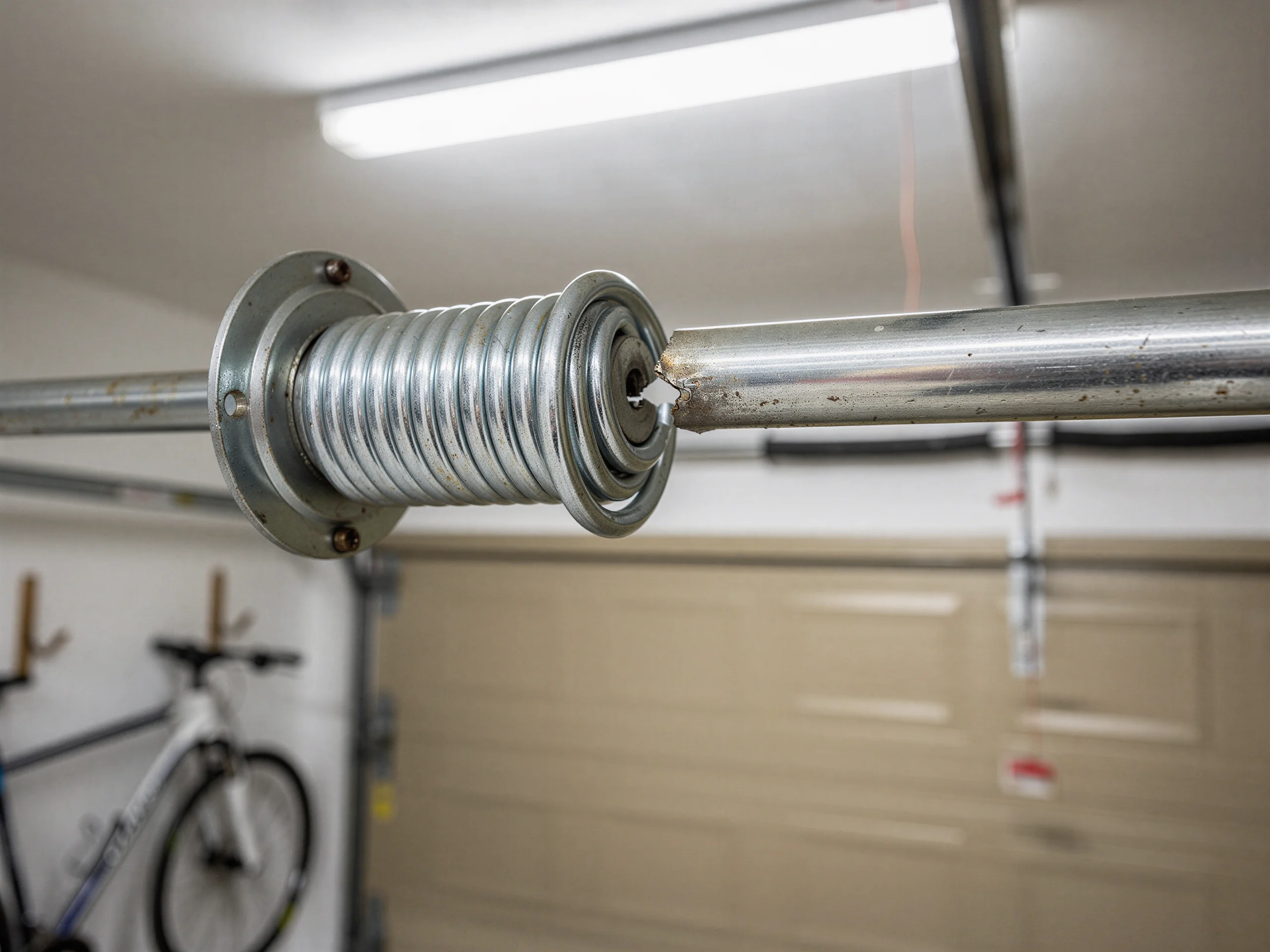
If the panel pattern is discontinued, which happens often on doors from the 1970s through the 90s, a DIY panel swap can turn into ordering a mismatched replacement that never sits flush, or cutting into a torsion spring system you didn't mean to touch. We've seen both. If your door is newer, the panel is a standard size, and you're just replacing a cracked skin with no spring or track work involved, it's a reasonable weekend project.
Call-out for unknown panels
If you're not sure which panel you have, if the door won't come apart cleanly, or if there's any chance you'll be working near a wound spring, that's where we'd tell you to call instead of improvise. A wrong move near spring tension is not a close call.
What It Costs
We won't throw a number at you without looking at the door, because panel replacement costs swing a lot depending on what you're dealing with.
Single panel pricing
A single lower panel on a door with a common steel or wood-composite section usually runs less than matching a discontinued pattern on an older door, and a full double-wide door with four panels wide costs more than a single-car door with three. Age matters more than most people expect.
Discontinued profile sections
A door installed when the house went up in the 1986-ish median build year for this area often has a panel profile that's no longer made, which means the whole section group might need replacing instead of just the damaged piece, even if the rest of the door is sound.
Firm quote after inspection
That raises the number, but it's the honest answer rather than quoting a price we can't back up on a door we haven't seen. We give a firm number after we're at the house and have the make, model, and panel style in hand.
Phone ballpark estimate
If you want a ballpark before that, tell us the age of the door and whether it's steel, aluminum, or wood composite, and we can narrow it down over the phone. We don't pad quotes with work the door doesn't need, and if a full door swap beats a panel patch on cost, we'll say so.
Talk to a local pro
Garage door service in Land O' Lakes?
Same-day service with honest, upfront quotes.